Overview
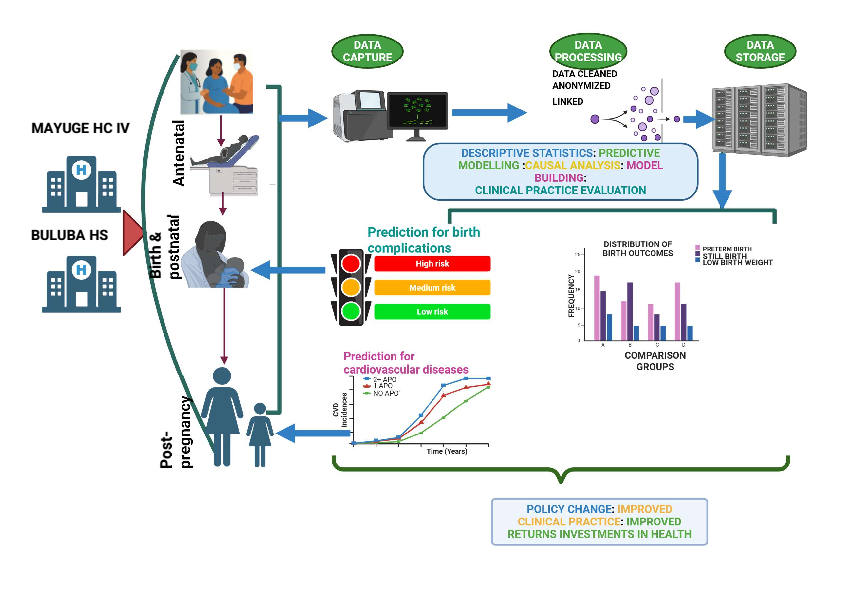
We are building the MIHRI Data Science Hub to transform how clinical data is used across healthcare, research, and training. Our goal is to create a secure, ethical, and innovative environment where patient data can meaningfully support better decisions, deeper understanding, and improved outcomes.
The Centre is the MIHRI’s hub for data and artificial intelligence, supporting researchers from all disciplines to explore new questions, deepen insight, and drive innovation and impact. We provide expert data science support, training, and collaborative opportunities that help researchers harness data, data science and AI in impactful, responsible ways.
Our long term vision is to make MIHRI a leading centre for healthcare data science in the region.
What We Aim To Do
Methodological, technical, and strategic data science expertise across MIHRI, supporting ethically responsible data use in clinical and research contexts.
Our Mission
Strengthen data‑driven healthcare and research by combining secure infrastructure, advanced analytics, and close engagement with clinical and scientific stakeholders.
Core objectives
Secure & Responsible Data Infrastructure
Developing governance frameworks, privacy‑preserving systems, and high‑quality data pipelines that support compliant and ethical use of health data.
Clinical Integration
Translating analytical insights into real‑world clinical workflows through close collaboration with healthcare professionals.
Training & Capacity Building
Delivering structured training pathways that enhance data literacy, statistical competence, and analytical capability across MIHRI.
Research Methodology & Support
Providing expertise in modern statistical methods, reproducible research practices, and contemporary epidemiological approaches to enable high‑impact science.
Advanced Analytics and AI
Developing interpretable and clinically relevant analytical models and decision‑support tools to improve patient outcomes and system performance.
MEET THE TEAM

Christopher Baleke
Christopher Baleke, MSc, is the President and Chief Scientific Officer of the Mayuge Institute for Global Health Sciences Research and Innovations (MIHRI), where he provides visionary scientific leadership in advancing maternal and child health research across Uganda and sub-Saharan Africa. In this role, he oversees MIHRI’s research portfolio, leading research strategy and overseeing scientific programmes that enhance health systems and strengthen evidence based decision making in low resource settings.
Christopher holds an MSc in Epidemiology from the London School of Hygiene and Tropical Medicine (LSHTM) and is a doctoral researcher at Bristol Medical School, University of Bristol, enrolled in the Molecular, Genetic and Life Course Epidemiology program. His PhD focuses on identifying gaps in postnatal care adherence, characterizing trajectories of cardiometabolic risk factors, and improving the prediction of cardiovascular disease using real world clinical practice data. His research integrates advanced epidemiological methods, health systems evaluation, and applied data science to generate impactful, policy relevant evidence.
As Co-founder and organizational lead of MIHRI, Christopher drives the development of a pioneering linked birth cohort in rural Uganda. This initiative leverages electronic health records (EHR) to strengthen maternal and child health surveillance, improve risk prediction models, and evaluate scalable public health interventions. He also leads a nationwide review of maternal clinical records to assess data quality and establish the foundational infrastructure for a digital birth cohort and future integrated health information systems.
Christopher brings extensive experience as a research team leader and epidemiologist, having managed large population based cohorts and major research programs, including randomized controlled trials. He has led multidisciplinary scientific teams, supervised complex field operations, and guided the design, implementation, and analysis of high impact public health studies across diverse settings.
His research interests span maternal and child health, infectious disease prevention, digital health innovation, and the application of advanced statistical, epidemiological, and data driven methods to evaluate interventions in low- and middle-income countries. Through his leadership and scientific contributions, Christopher is committed to generating robust, actionable evidence that strengthens health systems and improves health outcomes for vulnerable populations.

Denis Ndekezi
Denis is a Social Scientist and a member of the Mayuge Institute for Global Health Sciences Research and Innovation (MIHRI). He holds a BSc in Population Studies from Makerere University and an MPH with a focus on health promotion from Uganda Martyrs University.
As a behavioural social scientist and public health practitioner, Denis specializes in sexual and reproductive health services for adolescents, young people, and persons with disabilities. He is currently leading a project to develop an intervention for improving sleep health among Ugandan secondary school students.

Ratifah Batuusa
Ratifah Batuusa is a skilled Data Manager overseeing data collection, cleaning, and database management at MIHRI. She ensures high-quality data for research using tools like REDCap, ODK, R, and Python, contributing to reliable evidence for maternal and child health studies.

Alice Nassanga
Alice is a Program Administrator and Research Data Administrator at the Mayuge Institute for Global Health Sciences Research and Innovation (MIHRI). She is a Social Scientist with a bachelor’s degree in Social Work and Social Administration from Uganda. With more than six years of experience in health research, she specializes in sexual and reproductive health among adolescents, young people, and individuals living with HIV.
In her previous work, she has contributed to several major research initiatives, including the Entebbe Mother and Baby at 21 cohort study (EMaBs@21), which explores young people’s perceptions of cardiovascular disease (CVD) risk, examining social, environmental, and lifestyle influences, sources of information on non-communicable diseases, and strategies for reducing risk. Her portfolio also includes epidemiological and interventional work such as the multi-country Long-Acting Treatment in Adolescents (LATA) clinical trial evaluating long-acting injectable HIV treatments, and studies on menstrual and mental health among Ugandan schoolgirls.
In her role as a Program Administrator, Alice brings strong expertise in research administration, data management, and research systems. She provides leadership in study coordination, data quality assurance and regulatory compliance to enhance research efficiency, accuracy, and integrity.